Mill Creek's Proposed Annexation Cuts One Tax and Adds Another. Who Comes Out Ahead?
November 5, 2026
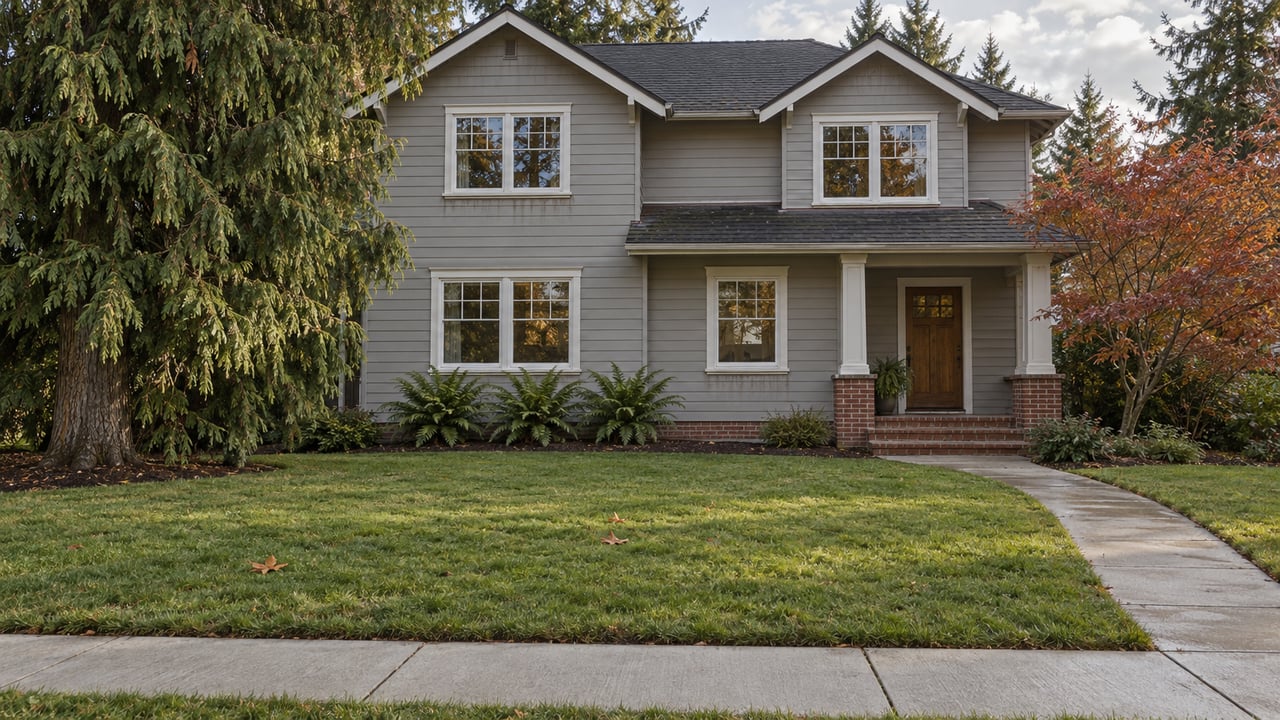
A house near 180th Street SE can sit just south of Mill Creek's city limits, close enough to share its parks and shopping, and still be outside the City of Mill Creek. Those homes are in unincorporated Snohomish County. They fall inside Mill Creek's Urban Growth Area, but they aren't city property yet. On October 13, 2026, the City Council voted 6–0, with one abstention, to authorize the City Manager to pursue annexing that area. If it goes forward, the property-tax line on those homes will look different in a few years.
The City's figures show an estimated lower property-tax rate and a new utility tax.
The first phase covers what the City calls Mill Creek South: Blocks C, D and H, south of the current city limits. The City's FAQ gives the boundaries as 35th Avenue down to 180th, along 22nd Drive SE to 192nd Street SE, then up Waxen Road to 183rd Street SE and back into Mill Creek. The FAQ puts the population at about 11,000. The Everett Herald reported that the area would grow the city's population by more than 50%. The area includes North Creek Park and Mays Pond Park. The City posts a boundary map, and it's the quickest way to see which side of the line a particular street is on.
So two homes a few blocks apart, on either side of that line, can pay different tax rates. That's the starting point for every number below.
The City's annexation FAQ spells out both sides of the change for annexed property owners.
| Today, unincorporated county | After annexation, City estimate | |
|---|---|---|
| Property-tax levy per $1,000 of assessed value | $9.26 | $8.73 |
| Annual property-tax change, $850,000 home | — | About $250 less |
| City utility tax | None | 5%, estimated at $327 to $423 per year |
Mayor Stephanie Vignal summed up the trade for KING 5: "The property tax levy is going to go down; however, they will have a utility tax just like all residents of the city."
People in Mill Creek South will be "like existing city residents" when it comes to the utility tax, and existing city residents are still getting used to it. The Council adopted the tax by Ordinance No. 2025-939 on November 11, 2025, and the 5% rate took effect June 1, 2026.
The City's utility occupation tax page describes it as a tax on public utility providers, set at 5% of their gross income from customers inside city limits. Municipal Code Chapter 3.14 lists the covered businesses:
The code sets storm and surface water at 0%, and its definition of network telephone service excludes internet access.
Where does the City's money come from? The staff presentation from October 13 cites SME Consulting's July 2026 financial analysis. It projects about $2.7 million a year in net revenue to the City starting in year one, growing to about $5.3 million a year by 2045.
The same slides explain the choice of this area. It brings in the Highway 527 corridor down to 192nd Street SE, along with commercial and industrial land that "increases bonding capacity." Those figures include expected costs for North Creek Park and Mays Pond, which the consultants flagged for open questions about fish passage and water maintenance.
Mayor Vignal described the pressure behind it in the Herald: "we cannot afford to keep giving (residents) a high level of service without continuing to go up and up and up on their taxes on their housing." City staff told the Council that annexation would help pay for large projects, including South Town Center and the DRCC campus.
Councilmember Vince Cavaleri abstained. He told the Herald, "There might be an initial sugar high, but I don't trust the data," because he doesn't think the projections reflect broader trends such as the housing market. KING 5 reported that he pointed to aging infrastructure, slower growth in new homes and businesses, and the extra borrowing capacity a larger city gets. He would like the question put to a vote.
The October vote didn't annex anything. It let staff start formal work with Snohomish County and the Boundary Review Board. The staff packet lays out the planned sequence:
The choice of method affects how people in Mill Creek South have a say. Washington's RCW 35A.14 provides for a city-resolution election and for a direct petition by property owners. Under the interlocal agreement route, the city and county agree on boundaries and an effective date and hold public hearings before signing. The city then adopts an annexation ordinance. The Herald noted that whichever path the Council picks, it still has to approve a final ordinance.
Will zoning and building rules change? The City says some Mill Creek codes differ from County codes, and it takes questions about specific parcels through the feedback form on its annexation page. If you're planning an addition, an ADU or a lot split, ask about your parcel before you count on either set of rules.
Is the $8.73 rate locked in? It's the figure in the City's FAQ. The Council is still setting the 2027 property-tax levy, and the City's staff estimate January 1, 2028 as the effective date, so treat the rate as the City's current estimate.
Is more annexation coming after this phase? The Herald reported that the Council has expressed interest in annexing the eastern part of the growth area, out to Sunset Road and east of Seattle Hill Road, within the next three to five years.
This post is general information, not legal, tax or financial advice. Please check how these changes would apply to your property with the City, the County or a qualified tax professional.
If you're weighing a home south of the city line, or you own one and want to understand where it stands while annexation moves forward, Jessica Gustelius can go through the tax history, the City's maps and the timeline with you, one address at a time. Let's Connect.
Stay up to date on the latest real estate trends.


Whether you're buying, selling, or investing, Jessica Gustelius is committed to delivering a seamless and personalized real estate experience. With expert market knowledge and a passion for helping clients succeed, she’s ready to guide you every step of the way. Let’s make your next move happen.