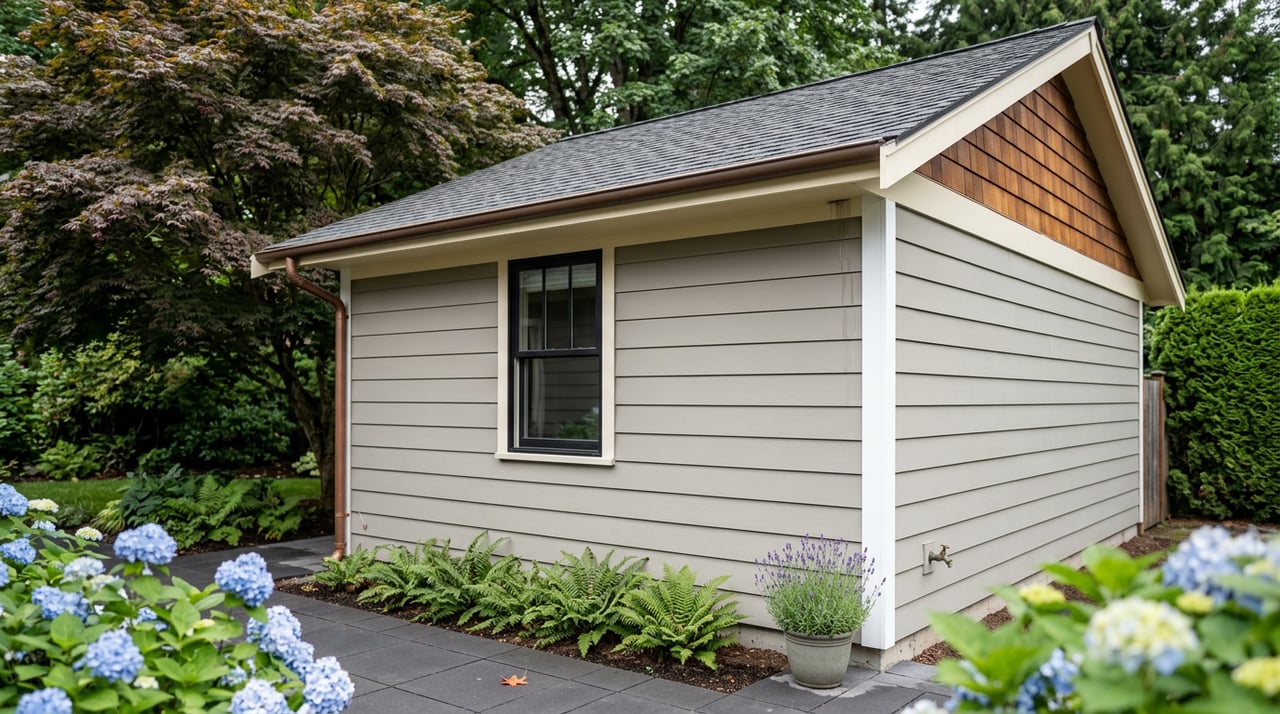
Preparing to Sell in Mill Creek's Tree-Named Divisions: The Inspection Findings That Keep Coming Back
July 23, 2026
July 23, 2026
The first thing a good inspector does on a Juniper or Huckleberry cul-de-sac is press a thumb into the bottom six inches of the siding. If it gives, the report is already writing itself. That single gesture, repeated on the north wall of a home built in the 1980s, has become the quiet pivot point of a lot of Mill Creek listings this year.
For most of the last decade, sellers in the original plat could treat that soft edge as cosmetic. Buyers were competing for scarce inventory and were willing to inherit the fix. That trade has changed. The homes have aged another cycle, the trees planted with them have closed the canopy over the north walls, and the market has handed buyers something they did not have in 2021: choice. Preparing to list in 2026 is less about staging and more about deciding which of five recurring findings you want to solve before an inspector puts them in writing.
Mill Creek was master-planned starting in the 1970s, with early developers clearing forest along what would become Main Street, and the tree-named divisions that followed all pulled from a shared construction playbook. That is why the same handful of items appear on inspection report after inspection report.
T1-11 panel siding failing at the bottom edges. The original T1-11 plywood panels from the 1976–1990s build period are rotting at the bottom edges where moisture wicks up through the grooves. Push on the bottom six inches; if it is soft, that is T1-11 failing, and it is happening on virtually every original-siding home in the community.
LP Inner-Seal swelling on shaded walls. On homes built into the 1990s, the substitute for T1-11 was often engineered-wood hardboard. Inspectors specifically look for failed 90s LP Inner-Seal or similar hardboard on north-wall sections, swelling at the bottom edge. The pattern is consistent because the cause is consistent: the trees planted in the 1970s and 1980s are now 40 to 50 feet tall, north-facing walls in the tree-named subdivisions never see sun, and persistent shade means persistent moisture against the siding.
Cedar-shake runoff staining the walls below. Many homes still have original cedar shake roofing; tannin-stained water runs off the roof onto siding below, leaving dark streaks and accelerating deterioration at the transition, which proper kickout flashings redirect away from the walls. A buyer sees the streaks as a paint issue. An inspector sees a missing detail behind the gutter.
No weather-resistive barrier behind the sheathing. This is the finding sellers are most surprised by, because it is invisible until the siding comes off. The sheathing is usually plywood or OSB, often without a weather-resistive barrier, because 1970s and 1980s construction did not require house wrap, and moisture damage frequently shows up at window corners and bottom-of-wall sheathing.
Failed flashings the old siding was hiding. When a re-side happens, the story underneath is often worse than the story on top. Contractors remove the existing siding completely and inspect every square foot of sheathing before anything new goes up, and that is where the hidden problems appear: failed flashings, missing WRB, saturated sheathing that caused the old siding to fail in the first place.
None of these are Mill Creek secrets. They are the byproduct of a single construction era meeting a single Pacific Northwest climate over 35 to 50 winters. What has changed is the leverage a buyer has when the report lands in their inbox.
For a decade, the Snohomish County market forgave a lot. It is currently forgiving less.
The June 2026 NWMLS median sales price in Snohomish County was $725,500, and pricing has held up better than most sellers expect given the inventory shift underneath it. Active listings across NWMLS rose 16.4% year over year to 23,088 at the end of June 2026, up nearly 8% from May, with Snohomish County posting one of the largest inventory increases in the state at +29.2%. Buyers in Mill Creek have alternatives they simply did not have two summers ago.
That is the mechanism a seller needs to understand. Demand has not disappeared. Sales Activity Intensity came in at 48.4% in June, which still qualifies as a Very Strong market, meaning a large share of resale listings are still going pending within the first 30 days. But the homes going pending fast are the ones that do not give a buyer a reason to pause, and with the 30-year fixed mortgage rate at 6.60% as of June 1, buyers are not just looking at list price, they are looking at payment. A $30,000 siding note in an inspection response is a payment problem, not a repair problem.
When buyers finally have choices, "we'll credit at closing" stops being a winning answer. The listings that hold their price are the ones that never gave the buyer a reason to open a spreadsheet.
The retail context around the Town Center reinforces the point rather than complicating it. Mill Creek has seen vacancies at key retail spaces across the city, including the Town Center, The Farm and the QFC Plaza, and a buyer touring three homes in one weekend is absorbing that visual alongside the drive up Bothell Everett Highway. Their tolerance for a fourth thing to fix is thinner than it was.
Here is the piece that surprises even experienced sellers. The repair itself is rarely the bottleneck. The approval to do it is.
If a home is in the original plat, meaning the tree-named neighborhoods, the Mill Creek Community Association reviews exterior changes; Heatherwood West is not under MCCA and has separate rules. That single distinction dictates whether a seller can start a siding or roof project on a Monday or has to wait several weeks for architectural review. The two neighborhoods can share a zip code and share a builder, and still have completely different pre-listing timelines.
A realistic HardiePlank re-side on an original-plat home lands in a defensible range. HardiePlank with ColorPlus runs $14 to $20 per square foot installed, typical Mill Creek home falls between $21,000 and $42,000, and the homes are generally well-sized with moderate complexity. The math a seller should be running is not "can I afford this repair" but "does the buyer's next-best listing have this problem already solved." In a market with measurably wetter conditions than Bellevue at roughly 44 inches of annual rainfall, the answer often decides the offer.
For a home in the tree-named plat, a workable order of operations looks like this:
For homes in Heatherwood West, steps two and three collapse into a single conversation with a contractor, which is a real timing advantage worth pricing into your list date.
Should I just credit the buyer at closing instead of doing the work? It depends on the size of the finding and how many comparable listings the buyer is watching. In an environment with Snohomish County's +29.2% year-over-year inventory growth reported for June 2026, a credit invites renegotiation rather than closing it. Small findings can be credited. Structural moisture behind sheathing rarely can.
Does a pre-listing inspection have to be disclosed? Washington's Form 17 seller disclosure is its own conversation and it is worth having with your advisor early, because what you know before listing shapes what you must share. This is not the place to guess; it is the place to plan.
What if my home was re-sided ten years ago with vinyl over the original T1-11? That is common in the tree-named divisions and it is not automatically a problem, but an inspector will still look at what is behind it. The hidden problems that caused the old siding to fail in the first place, including failed flashings and missing WRB, do not resolve themselves when new siding goes on top. A moisture meter and a candid contractor conversation will tell you whether the buyer's inspector is likely to flag it.
Is now a bad time to list? No, but it is a different time to list. Snohomish County is not one housing market right now; residential resale is still showing strong demand at the right price points, while condos and new construction are seeing more pricing pressure and more buyer selectivity. A well-prepared single-family home in Mill Creek's original plat still competes well. A poorly prepared one competes with everything.
If you own a home in one of the tree-named divisions and you are thinking about listing in the next six to twelve months, the useful conversation is not about price yet. It is about which two or three findings your buyer's inspector is going to write down, and whether the MCCA calendar gives you time to make them disappear before the photos are taken. That is the conversation Jessica Gustelius has with Mill Creek sellers every week, and it is the one that tends to set the list date, the list price, and the length of the negotiation that follows. When you are ready to walk your own north wall together, reach out.
Stay up to date on the latest real estate trends.

Whether you're buying, selling, or investing, Jessica Gustelius is committed to delivering a seamless and personalized real estate experience. With expert market knowledge and a passion for helping clients succeed, she’s ready to guide you every step of the way. Let’s make your next move happen.